


I joined Substack on June 30th and here we are in September and over 150 of you have chosen to subscribe and engage with my writing. I never expected this kind of reaction. I told myself, “self, if you get one person a week to say: ‘hey, I like this guy’s writing,’ then you are doin’ something right.” Well, I can’t describe what it means to have so many of you reading.
For this two-month monthiversary I wanted to tell you the story of the Mesoamerican god, Mixcōātl. As you may have sleuthed, that’s where my last name, Mixco, originates. We pronounce it, “MEECE-ko,” though you would not be faulted for thinking it was pronounced “MEESH-ko,” as an “x” in Spanish often has the “sh” sound.
For a long time I didn’t like my name. Either of my names. Javier Mixco became Jaw-Ver Mexico, or worse. My kindergarten teacher Mrs. Nielsen, gave up on my name entirely and decided she’d just call me Mario. How she got Mario I have no idea as this was well before Nintendo, though I bet she would have been hell-on-wheels in Mario Kart. Maybe an Italian name was as ethnic a name as she felt comfortable with, who knows, but my mom put a quick stop to it. By the time I was in the third grade I think my classmates found mispronunciations of my name by substitute teachers even more annoying than I did. They’d all shout, “it’s HAH-vee-Air!” They were good eggs.
As with most of my insecurities from childhood, this one faded and I’m proud of my name. Though, I’ll admit, I still resent my folks didn’t spell my first name Xavier—with two X’s in my name I could have been Dos Equis! In fact, the reason they settled on Javier was they’d gotten into the habit of calling my mom’s pregnant belly “X” and it was one of the only X-names they liked. But my dad being my dad insisted on the Spanish spelling.
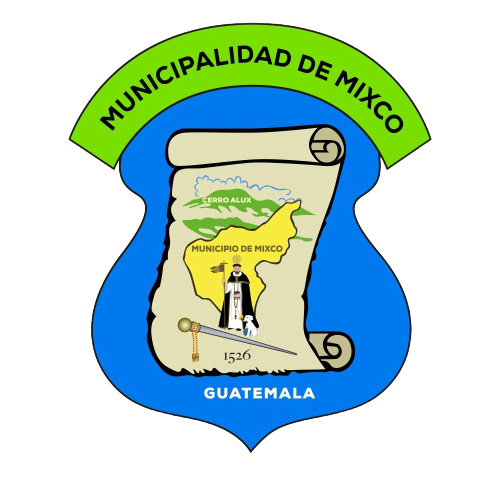
My last name, Mixco was likely adopted by some distant ancestor who lived in or around the city of Mixco in Guatemala. Guatemala may be small but it has a population approaching 19 million, which for a more local reference is close to the population of New York State but its about 20% smaller than the Empire State. Mixco is the second largest city in Guatemala, here is its super cute city seal with zero phallic symbols.
My dad’s family tree spreads all over Central America with his mother’s family coming from Nicaragua and his father’s from El Salvador. But back before these arbitrary boarders were drawn on a map, the area was a part of what Anthropologists call, Mesoamerica, or middle-America. (They are a creative bunch—I get to make fun of them because I’m a baby Anthropologist, I’ve got a BA and everything.) Mesoamerica spans most of Mexico and all of Central America. My mother’s family is all from central and northern Mexico, so I am pretty much a mutt Latino.
Mesoamerica
Most scholars agree that people started to inhabit Mesoamerica as far back as 8000 BCE (Before Common Era). They call this the Archaic Period. The oldest culture we know of from this area are called the Olmecs, often referred to as the “mother culture.” The Olmec’s arrival on the scene marked the beginning of the Formative Period in 2000 BCE. For context, around the world in 2000 BCE:
Stonehenge had been a ritual and cultural hub for more than 500 years
The Bronze Age was beginning in most of Europe
Egypt was in its 12th Dynasty under Amenemhat I
The Third Dynasty of Ur had just fallen in the Middle-East and Sumerian tales of Gilgamesh were circulating eventually becoming the oldest surviving written story The Epic of Gilgamesh hundreds of years later
The Longshan Culture was building walled towns along the Yellow River basin in China
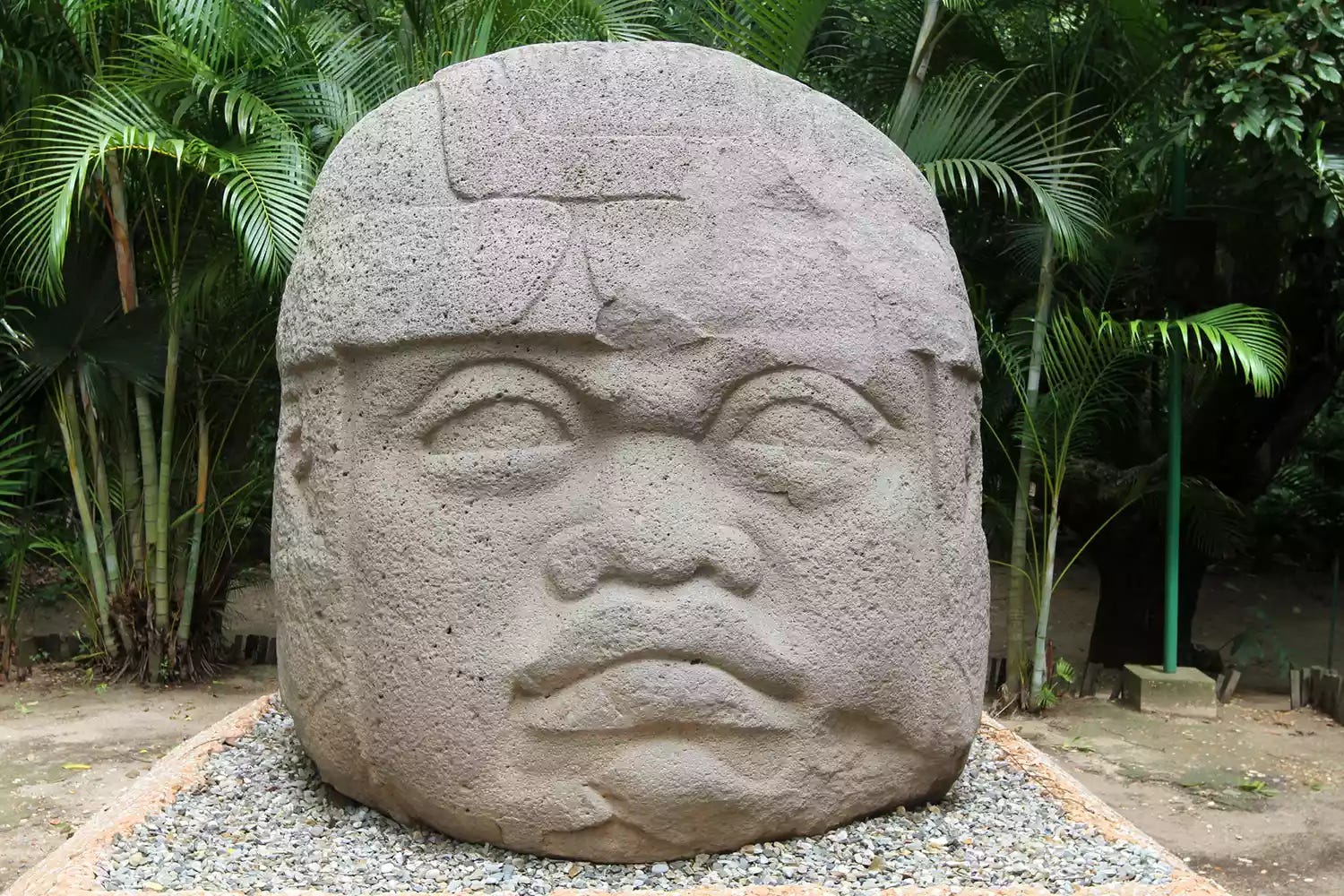
The Olmecs are most famous for their colossal head sculptures that were scattered around Mesoamerica.
The Mayan culture was prominent after the Olmecs, and their civilization existed from around 300 CE to 900 CE. Then the Aztecs and other smaller civilizations start take over until the early 16th Century, including the Toltecs, Mixtecs, and other smaller groups.
God of the hunt
The hunter god, Mixcōātl is translated from Nahuatl as the Cloud Serpent. Nahuatl was spoken by the Aztecs, and the root of the name is mixtli (cloud) + cōātl (serpent). He was identified with the Milky Way and was thought to control storms and fire.1
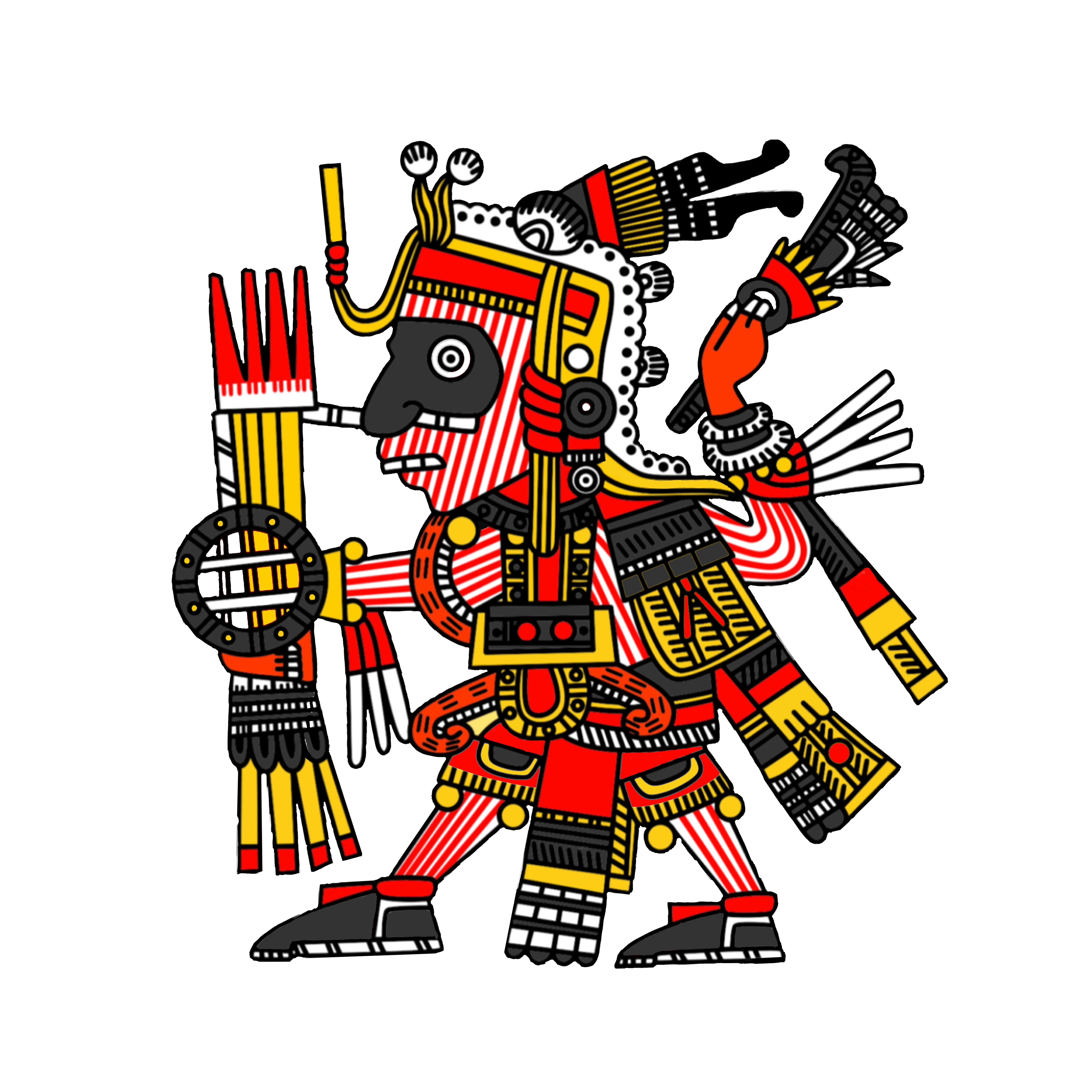
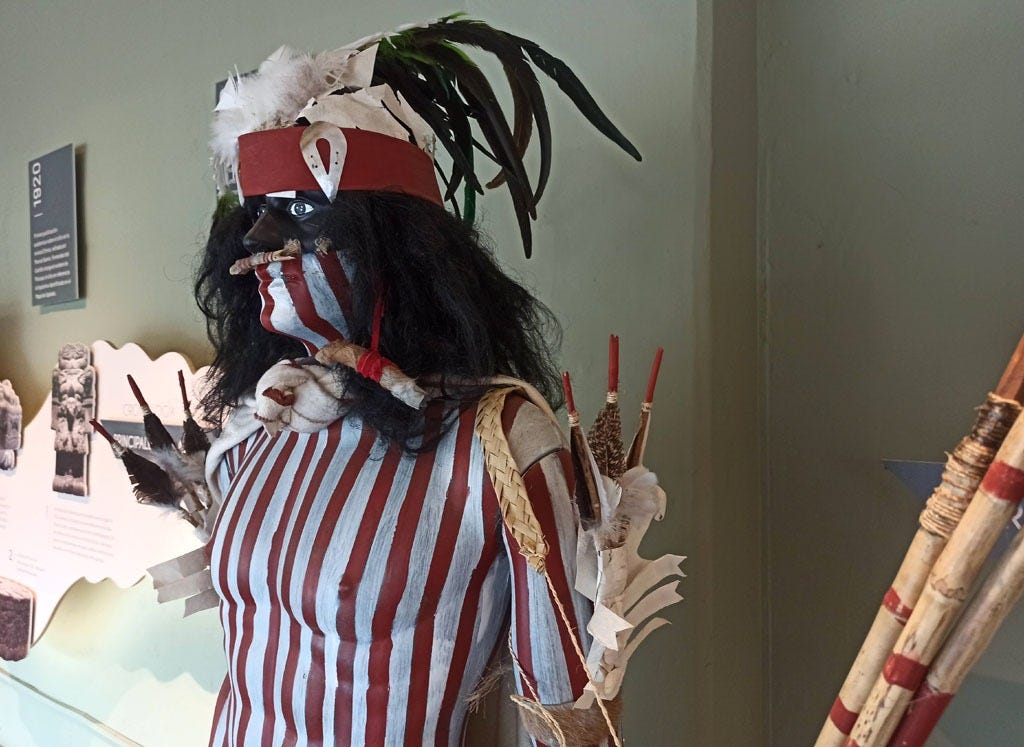
Mixcōātl is often depicted wearing a black mask with distinctive red and white pinstripes painted on his body. He also is depicted with his hunting gear, the bow and arrows, and a net for carrying his dead game. This is a great picture of how Aztecs would have dressed like .2
A Franciscan friar Gerónimo de Mendieta wrote the Códice Mendieta, which compiled a collection of documents from the 16th and 17th centuries. It contains some descriptions of Mesoamerican deities, including our boy Mixcōātl and his six giant children.
Surrounded the Earth by the seas and submerged in them for a long time, the old frog, with a thousand jaws and bloody tongues, and the strange name it takes, Tlaltecuhtli; Iztac-Mixcoatl, the fierce white cloud serpent, who lives in Citlalco, joins her in sweet collusion. And six tlacame with love engender; the six brothers on earth dwell and are the trunk of various races: the first-born, the giant Xelhua, of Itzocan and Epatlan, and Cuauquechollan, the cities he founded. Tenoch, the great Aztec claudillo, in Mexico stops the march of his people, and builds the great Tenochtitlan, a lake city. The strong Cuetlachoapan founds Ulmecatl, and gives its indolent people a seat. On the shores of the gulf, Xicalancatl, the brave Mixtecatl takes refuge. Of Mixtecapan in the sour lands; Otomitl, the xocoyotl [younger son], always lives in mountains near Mexico, and there it thrives in rich populations such as Tollan, Xilotepec and Otompan.3
This is a replica statue on display at the Palacio de Bellas Artes in Mexico City of Mixcoac, another spelling of Mixcōātl.
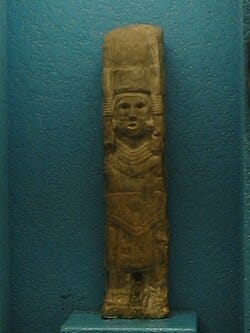
The description of the statue is: “Sculpture with the image of Mixcōātl, patron of the hunt and one of the most important gods of war in ancient Mexico. He is considered to be the father of Quetzalcoatl. Original in the Castle Teayo, Veracruz.”
What it means to me
All of that is pretty cool, but I bet you are wondering why I’m giving you this Anthropology lesson. I’ve mentioned this before, but I grew in Utah. Which is about as far culturally and psychically from my heritage as you can get without actually leaving the planet Earth. Calling Utah homogeneous back then, and today pretty much, is a huge understatement.
For most of my life growing up, my heritage was just sort of there. I spoke Spanish, I ate spicy food, and my Grandma could hardly speak English, but I didn’t feel a connection to anything bigger than that. I didn’t have any extended family in Utah so none of my playmates spoke Spanish or looked like me. The only times I noticed being different were things that embarrassed me, like my name being mispronounced or my friends being in awe at my mom speaking Spanish. Trying not to react to the shit she’d say about them is probably where I first developed my poker face.
I remember even up to my time in High School when a few of my friends were getting obsessed with their family heralds and crests (surprise—I’m a nerd and so are my friends) I felt completely left out. I spent countless nights trying to design and draw my own family crest hoping to fit in.
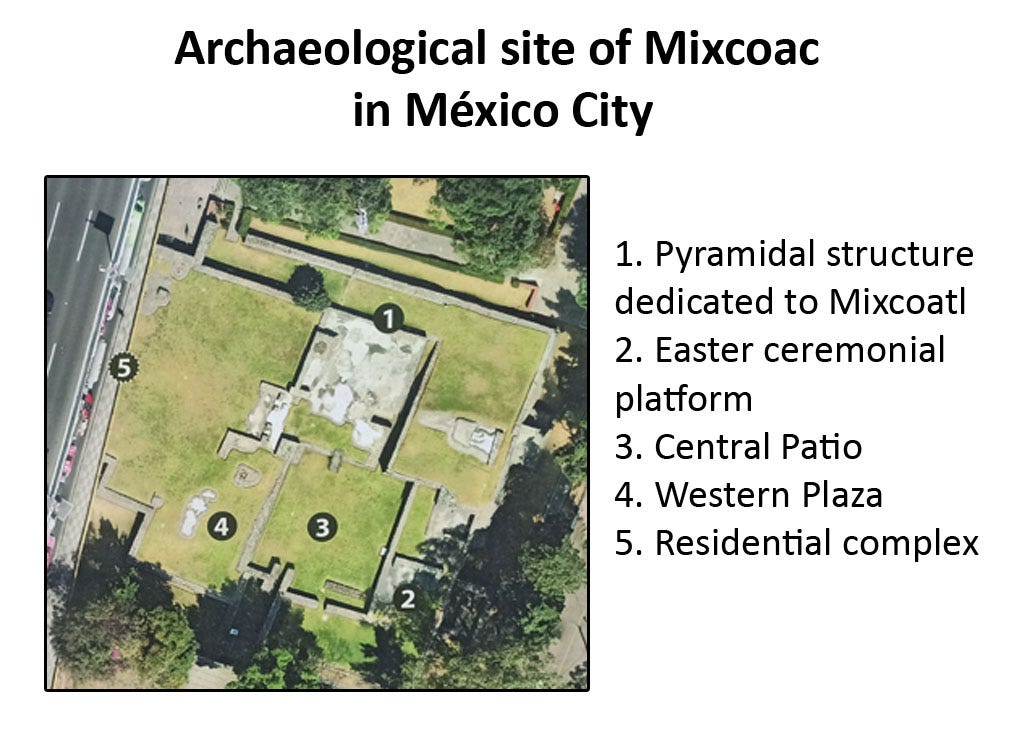
In Mexico City, there is a huge boulevard called Avenida Río Mixcoac and one of the suburbs shares the same name. It is hard to describe how much of a kick I get out of seeing my name on a street sign or metro station after spending so many years feeling like an outsider.
So, here I am, squarely in my middle years, and I couldn’t be more proud of coming from middle America named after the Cloud Serpent god of the hunt, Mixcōātl.
Thanks for reading and thanks for supporting me here on Substack! It means a lot to me.
-Javi
If you want to learn a bit more about Utah, check out this little essay!
Miller & Taube, The gods and ymbols of ancient Mexico and the Maya : an illustrated dictionary of Mesoamerican religion, Thames and Hudson (1993).
Carlos Rosado van der Gracht, Mixcoac—bringing order to the cosmos through human sacrifice, Yucatan Magazine, October 10, 2022.
Guilhem Olivier, Cacería, Sacrificio y Poder en Mesoamérica: Tras las Huellas de Mixcóatl, Fondo de Cultura Económica (2015).
This was an awesome place to start my reading for the day. Substack's estimated time to read said 7 minutes but Im here to say that that's ludicrous. Only possible if I just read the words on the screen. Instead, I was googling and looking at maps and going on an adventure from my couch. How lucky we are to have that.
I have not been to Mexico, but I have been blessed to have been able to visit Guatemala for a brief 2-week timeframe. This piece brought me back there to reminisce for a little bit, too.
As for my complaints, I am so mad at your Kindergarten teacher for not being able to handle saying Javier. Like.... what.
Also, I grew up in the Midwest, so it seems like we both get to say we are from "middle-America" haha
Cheers to you, Javier. Thank you for the anthro.
I love learning these little things that make us, us. The things that used to embarrass us and how it becomes something to be proud of. Proud of you. Good writing as well.